
The most expensive gemstone in the world depends on the measuring stick. If you mean a public auction record, exceptional pink and blue diamonds dominate the top of the list. If you mean colored stones outside diamond, the conversation quickly turns to Burmese ruby, Kashmir sapphire, jadeite, alexandrite, and a few collector minerals that make gem dealers lean forward in their chairs.
That is the honest answer, and it is more useful than pretending one gem species permanently wears the crown. Gems are not ranked like racehorses. A stone becomes extraordinary because identity, color, size, treatment status, provenance, documentation, cutting, and demand all meet in one object. Miss one of those, and the price story changes quickly.
There Is No Permanent Crown
In public auction history, the CTF Pink Star is usually the first name to know. The 59.60 carat Fancy Vivid pink diamond sold at Sotheby’s Hong Kong in 2017 for US$71.2 million, a record often cited for any diamond or jewel sold at auction. That is a spectacular number, but it does not mean every pink diamond is automatically the most valuable gemstone on earth. Size, color grade, clarity, cut, and the theatre of a major auction all mattered.
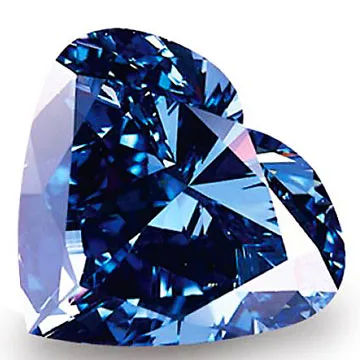
The Oppenheimer Blue, a 14.62 carat Fancy Vivid blue diamond, sold at Christie’s Geneva in 2016 for about US$57.5 million. Sotheby’s later reported the Williamson Pink Star at about US$57.7 million in 2022, placing it among the highest public jewel and gemstone auction results. These stones are less like normal inventory and more like portable historical events. You do not compare them with a calculator alone.
Why Colored Diamonds Often Lead Public Records
Fine colored diamonds sit in a peculiar market. They combine diamond durability, extreme rarity in vivid natural color, international recognition, and a collector base comfortable with very large numbers. Pink and blue diamonds also photograph well, carry simple color stories, and attract press attention. A strong auction house can turn that attention into bidding tension. The stone still has to deserve it, of course; no amount of velvet lighting can rescue a weak gem at the highest level.
Per carat, the story can look different. A smaller stone with exceptional color and scarcity can beat a larger stone in price per carat. This is why the phrase “most expensive gemstone” can be slippery. Total price rewards size and fame. Per-carat price rewards concentration of rarity and quality. Collector rarity rewards another thing again: the hunger of a small group of people who know exactly what they are looking at.
Ruby, Sapphire, Jadeite, And Alexandrite Still Belong In The Room
For colored gemstones outside diamond, ruby is one of the strongest record holders. The Sunrise Ruby, a 25.59 carat Burmese ruby mounted by Cartier, sold at Sotheby’s Geneva in 2015 for just over US$30 million. Guinness World Records lists it as the most expensive ruby per carat sold at auction. Ruby can command this kind of attention when the color is exceptional, the stone is untreated or clearly documented, the origin is important, and the size remains impressive without sacrificing beauty.
Sapphire has its own royalty in the market. Kashmir sapphire is famous because the best stones can show a velvety blue that feels almost lit from within. Ceylon sapphire, from Sri Lanka, has a different kind of authority: a long trading history, a wide color range, and a reputation for lively, wearable stones. I am Sri Lankan, so I will confess a little bias here, but it is an earned bias. Good Ceylon sapphire has a brightness that can make a stone feel awake rather than merely blue.
Jadeite also deserves respect because top-quality imperial green jadeite works under different cultural and market rules from faceted corundum. Alexandrite is another fascinating case: fine stones with strong color change, good clarity, and useful size can be astonishingly valuable. Then there are rare collector stones such as painite, musgravite, and taaffeite. Some are famous for scarcity, but rarity alone does not guarantee jewelry practicality, beauty, or an easy resale market. A rare name is not a magic wand.
What Actually Makes A Gemstone Expensive?
Expensive gemstones usually earn their price through several forces working together. The most dangerous mistake is to isolate only one factor. A large stone can be dull. A rare mineral can be unattractive. A beautiful color can lose confidence if treatment disclosure is vague. A famous origin can help, but origin should support the evidence, not replace it.
| Color | Vivid, balanced, attractive color is often the strongest value driver in ruby, sapphire, emerald, jadeite, and colored diamond. |
| Size with quality | Large size matters most when the stone stays beautiful. Big and sleepy is still sleepy. |
| Treatment status | Untreated or clearly disclosed stones may command stronger confidence, especially in high-value ruby and sapphire. |
| Origin and provenance | Kashmir sapphire, Burmese ruby, Ceylon sapphire, Colombian emerald, and famous ownership can affect perception when supported by evidence. |
| Documentation | Independent lab reports, auction records, and clear history help separate serious stones from expensive storytelling. |
| Demand | A stone needs people who care about it. Scarcity without desire is just a quiet mineral fact. |
How A Gemologist Reads A Record Price
When I see a record price, I first ask what market produced it. Was it a public auction, a private sale, a dealer price, or a retail listing? Then I ask whether the stone is exceptional within its species. A fine ruby and a fine sapphire are not valued by the same scale as a diamond. A jadeite necklace cannot be judged like a faceted spinel. A collector mineral may be rare enough to make a mineralogist smile, while still being unsuitable for a ring worn every day.
The practical habit is simple: admire the record, then return to the stone in front of you. Look at identity, color, cut, clarity, measurements, treatment disclosure, origin evidence, and whether the gem makes visual sense for its intended use. That habit protects both the serious collector and the person who simply wants a beautiful stone without getting hypnotized by famous numbers.
A Calm Way To Compare Valuable Gems
If you are comparing valuable natural colored stones, start with the natural gemstone buying guide and keep the treatment disclosure guide nearby. For sapphire specifically, the sapphire buying guide is the better next step than any auction ranking. The record stones are wonderful to study, but your own eye still has to live with the gem.
Sources Worth Checking
Useful public references include Sotheby’s reporting on the Williamson Pink Star and CTF Pink Star, GIA’s auction coverage of the Oppenheimer Blue, GIA’s 2017 colored diamond roundup, and Guinness World Records’ entry for the Sunrise Ruby. Auction records change, so treat them as dated evidence rather than permanent law.
Price records are stories about individual stones
The most expensive precious stone is not a fixed crown passed neatly from one gem species to another. Auction records usually belong to individual stones with a rare mix of size, color, provenance, documentation, and timing. That is why blue diamonds, pink diamonds, Kashmir sapphires, Burmese rubies, jadeite, and exceptional alexandrite can all appear in the same conversation.
For collectors and curious gem lovers, the practical lesson is better than the ranking. A famous price proves that evidence matters: identity, treatment, origin when supportable, condition, and a story that can survive more than one retelling.
Record Prices Are About Individual Stones
There is no single permanent most expensive gemstone because rankings change depending on whether you mean auction record, per-carat price, rarity, or collector demand.
Fine blue diamonds, pink diamonds, exceptional rubies, Kashmir sapphires, jadeite, alexandrite, and rare collector stones can all appear in these discussions. The better lesson is not to worship a ranking. It is to understand why rarity, color, treatment, provenance, condition, size, and documentation can turn one stone into a headline while another remains merely expensive.
| Auction record | A famous stone may sell for a record price because of size, story, provenance, rarity, and two determined bidders in the same room. |
| Per-carat value | A smaller stone can be more expensive per carat if it has exceptional rarity or quality. |
| Collector rarity | Rare species may be famous for scarcity but still awkward for everyday jewelry if durability, size, or cutting quality is limited. |
| Treatment and documentation | Clear reporting can materially change confidence and price comparison. |

