
Buying a gemstone online should feel exciting, but it should not require blind trust. You need clear information, accurate images, treatment disclosure, and a seller who is willing to answer practical questions before money changes hands.
When Should You Register Interest?
Online Gemstone Buying Should Be Visual And Verifiable
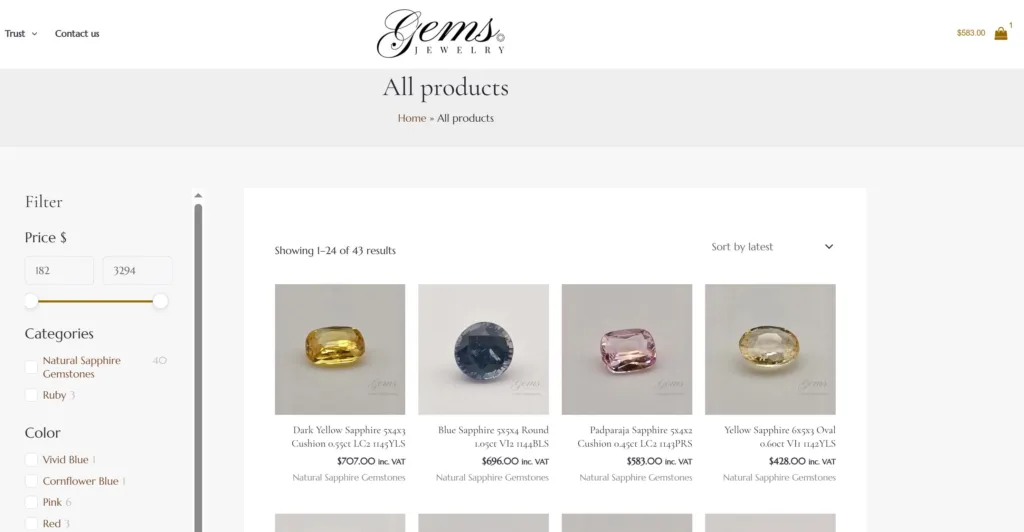
Compare photos, video where available, measurements, cut, inclusion visibility, treatment disclosure, and documentation before moving forward.
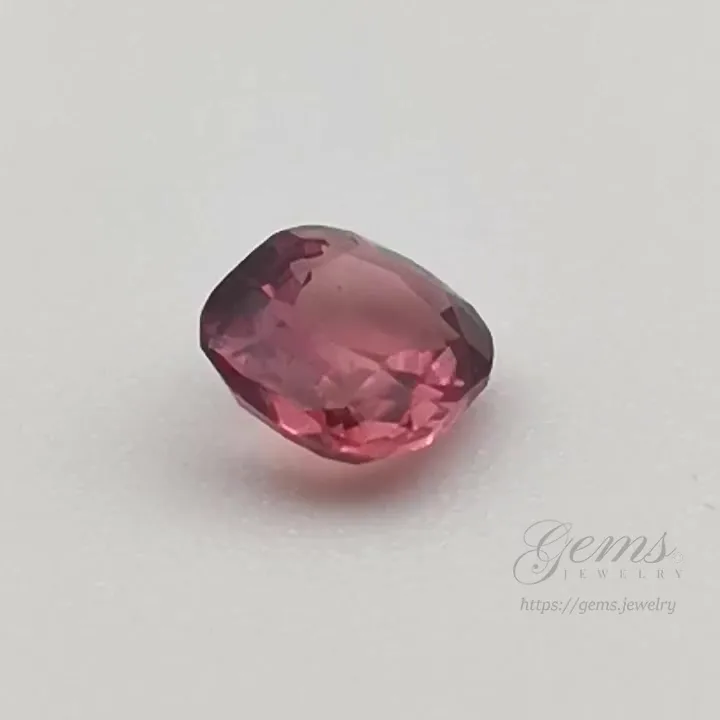

This guide gives you a calm checklist for evaluating natural colored gemstones online. It is written for you who want beauty, but also want to avoid vague listings, over-polished sales language, and stones that look very different in real life.
At Gems Jewelry, our focus is natural faceted colored gemstones, especially sapphires and rubies. The same principles below can help you compare many colored stones, whether you are buying for jewelry, a gift, a personal collection, or future custom work.
Start with the exact gemstone type
Before you compare price, begin with identity. A listing should clearly state what the stone is. “Blue stone” is not enough. “Natural blue sapphire” is far more useful. “Natural heated blue sapphire” is better still if treatment is known or expected.
Gemstone names can be confusing because the market uses broad terms. Traditional categories such as precious and semi-precious are not precise quality grades. A fine garnet can be more desirable than a poor sapphire, and a modest sapphire can be more valuable than a larger but weakly colored stone. Treat category labels as starting points, not final judgments.
- Natural gemstones formed in the earth and were later cut or polished.
- Synthetic gemstones have the same chemical identity as the natural gem type, but were grown in a laboratory.
- Imitation stones look similar to another gem but are a different material.
- Composite stones are assembled from two or more parts and need clear disclosure.
If a seller uses a romantic name without a mineral identity, ask for clarification. Your decision should be based on what the stone is, how it has been treated, and how it appears, not only on a beautiful trade phrase.
Check treatment disclosure before you fall in love with the color
Treatment is one of the most important subjects in colored gemstones. Many natural gemstones are treated to improve color or clarity. Some treatments are widely accepted. Others have a stronger effect on value, durability, or care requirements.
For example, heat treatment is common for sapphire and ruby. A heated natural sapphire can still be a beautiful and legitimate natural gemstone. However, an unheated sapphire of comparable quality may be priced very differently. someone should not have to guess which one is being offered.
Look for plain language such as “heated,” “no indications of heating,” “treated,” “dyed,” “filled,” “oiled,” or “treatment unknown.” If a listing avoids the subject completely, that is not automatically proof of a problem, but it is a reason to ask questions.
For a fuller explanation, use the gemstone treatment disclosure guide before comparing stones that seem unusually cheap or unusually clean.
Read color like someone, not like a browser
Color is usually the first thing that attracts someone, but it is also where online shopping can mislead you. Camera settings, background color, lighting, screen brightness, and image editing can all change the impression of a gemstone.
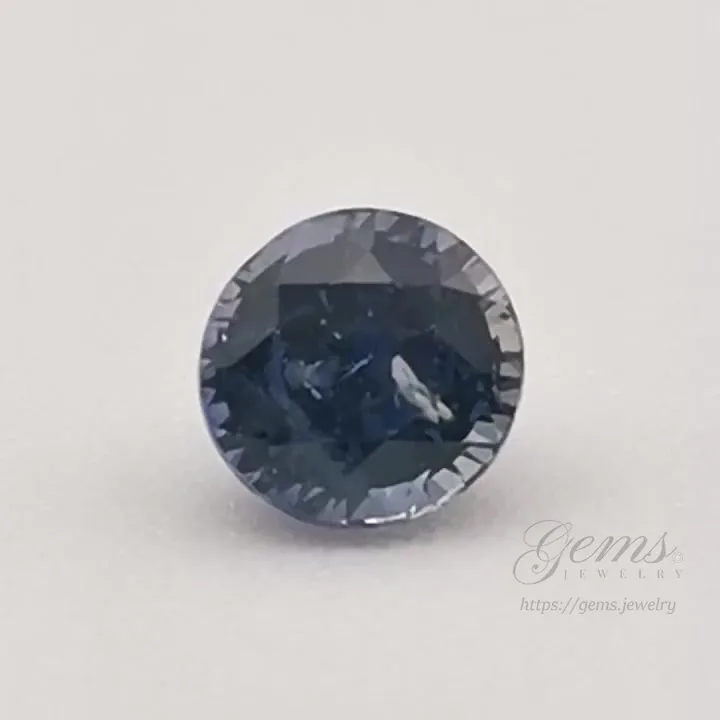
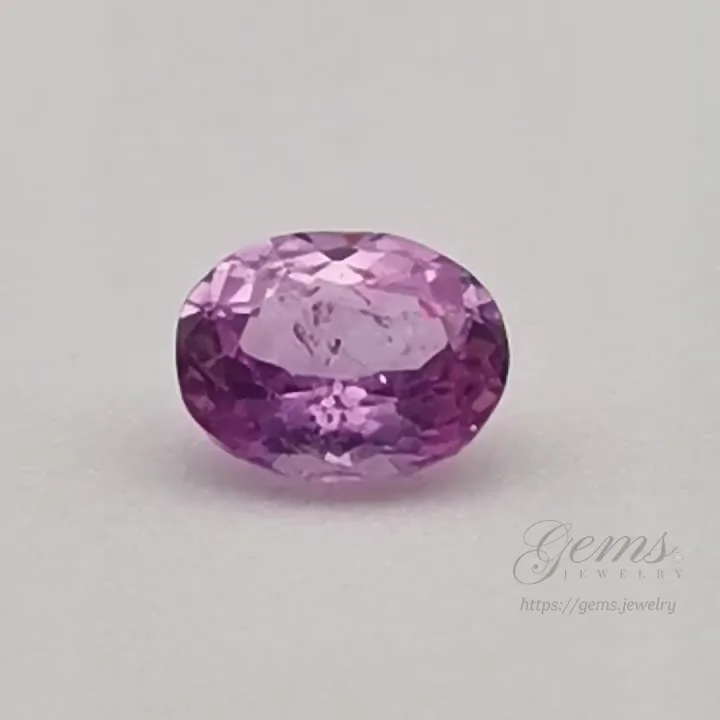
For colored stones, color is not only hue. You are looking at hue, tone, saturation, evenness, and brightness. A sapphire can be blue but too dark to show life in normal lighting. A ruby can be vivid in a close-up image but less lively in a hand video. A pink sapphire can look delicate in daylight and stronger under warmer indoor light.
- Check whether the listing includes multiple photos.
- Look for a video when possible, especially for sapphires and rubies.
- Compare how the stone looks against a neutral background.
- Notice whether the center goes dark, flat, or windowed.
- Ask whether the color is representative in normal viewing conditions.
If you are mainly shopping for sapphire, the sapphire color guide can help you compare blue, pink, yellow, green, purple, and teal sapphires with more confidence.
Understand clarity and inclusions
Inclusions are natural internal features. They are not automatically bad. In many colored gemstones, inclusions help separate natural stones from imitations and give the gem its individual character. The key question is whether the inclusions affect beauty, durability, transparency, or price.
Do not expect colored gemstones to be judged exactly like diamonds. Colored stones are often evaluated with different expectations depending on gem type. Emerald, ruby, sapphire, garnet, tourmaline, and spinel do not all share the same normal clarity profile.
A good listing should make visible inclusions clear. If the stone has a feather, surface-reaching inclusion, cavity, chip, or heavy silk, you should be able to understand what that means in practical terms.
Compare cut, shape, and face-up appearance
Cut is not just a shape name. Oval, cushion, pear, round, emerald cut, and trillion are shapes. Cut quality is how well the stone has been planned and finished. In colored gemstones, cutters often balance weight retention, color, and brilliance, so you may see more variation than in calibrated diamond cutting.
Look for a stone that faces up attractively. Watch for a large window, which is a transparent area that lets you see through the stone too easily. Also watch for extinction, where areas appear very dark because light is not returning well to the eye.
For jewelry, measurements can matter as much as carat weight. A well-cut 0.80 ct gemstone may appear better on the hand than a poorly cut 1.00 ct stone. Always compare millimeter size, depth, and face-up spread, especially if the gemstone is intended for a ring or pendant.
Do not judge price by carat weight alone
Carat weight matters, but it is only one part of value. In colored gemstones, price is shaped by identity, color quality, clarity, treatment, origin when documented, cut, rarity, size, and overall desirability.
someone can get into trouble by assuming that every larger stone is better value. A large stone with weak color, heavy treatment, poor cutting, or fragile inclusions may be less desirable than a smaller stone with excellent face-up beauty and clearer disclosure.
When a price looks unusually low, pause. It may be a legitimate opportunity, but it may also involve treatment, synthetic origin, imitation material, weak color, poor cutting, or missing disclosure. The lower the price seems compared with similar stones, the more carefully you should read.
Know when a lab report matters
A lab report can be very useful, especially for higher-value stones, important sapphires and rubies, unusual colors, or stones where treatment status strongly affects price. The report may identify the gem species or variety, note measurements and weight, and sometimes comment on treatment or origin if tested and offered by the lab.
For lower-priced stones, a full report may not always be practical because the cost of testing can be high compared with the price of the gem. That does not mean the stone is unworthy. It means you should weigh report cost against purchase value and risk.
If a listing says “certified,” read the report name, lab name, report number, and what the report actually concludes. The word certificate alone is not enough. For more detail, read our authenticity and sourcing guidance.
Review seller information and return terms
A trustworthy online gemstone purchase depends on more than the stone. The seller should provide clear terms, reachable support, and enough product information for someone to ask informed questions.
- Look for a clear returns or approval policy.
- Check whether shipping and insurance are explained.
- Read product descriptions for specific details, not only adjectives.
- Check whether the seller discloses treatment clearly.
- Ask questions before purchasing if anything important is unclear.
At Gems Jewelry, the Register Interest process is designed for one-off gemstones. It gives you space to ask questions before a final purchase conversation, instead of forcing a rushed checkout decision.
Final buying checklist
- Confirm the gemstone identity.
- Check whether it is natural, synthetic, imitation, or assembled.
- Read treatment disclosure carefully.
- Compare color in photos and video where available.
- Look for visible inclusions, chips, windows, or dark areas.
- Compare measurements as well as carat weight.
- Decide whether a lab report is appropriate for the value of the stone.
- Review return, shipping, and communication terms.
The right gemstone does not need exaggerated language. It needs accurate disclosure, appealing beauty, and enough information for you to make a confident decision.