
Rubelite Gemstone Description
Rubelite is a rare and unique gemstone that has gained popularity in recent years due to its striking color and exceptional hardness. This gemstone is a type of vanadate mineral, specifically known as vanadinite, which is a lead vanadate mineral. Rubelite is characterized by its vibrant pink to purple color, which is caused by the presence of vanadium and lead ions.
Share This Rubellite Gem Card
Editors and writers can use this compact card when they need a quick, sourced gem reference. It includes the practical facts that keep a stone from becoming just a pretty name.
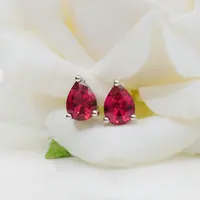
Please keep the attribution link with the card so readers can check the full guide.
The origin of rubelite is primarily found in the United States, particularly in the states of Colorado, Utah, and Wyoming. The gemstone was first discovered in the 1960s, and since then, it has been mined from various locations around the world. Rubelite has a rich history, and its discovery has been attributed to the efforts of several gemstone collectors and miners.
Technical Specifications
| Property | Value |
|---|---|
| Chemical Composition | Pb5(VO4)3Cl |
| Crystal System | Orthorhombic |
| Hardness (Mohs) | 5-6 |
| Refractive Index | Min: 1.80, Max: 1.85 |
| Specific Gravity | Min: 4.5, Max: 4.7 |
| Optical Properties | Birefringence: 0.02-0.03, Pleochroism: None, Optical Character: Biaxial |
| Cleavage | Perfect on {100} |
| Fracture | Conchoidal |
| Luster | Vitreous |
| Transparency | Translucent |
| Fluorescence | None |
Value and Price Factors
The value of rubelite is determined by several factors, including its color, clarity, cut, and carat weight. The most valuable rubelite is found in the pink to purple range, with the most vibrant colors commanding the highest prices.
Clarity is also an important factor in determining the value of rubelite. Inclusions and imperfections can significantly reduce the value of the gemstone, making it more difficult to sell.
The cut of the rubelite also plays a significant role in determining its value. A well-cut gemstone with optimal proportions and symmetry will command a higher price than a poorly cut stone.
The carat weight of the rubelite is also an important factor in determining its value. Larger rubelite gemstones are generally more valuable than smaller ones.
Care and Maintenance
To keep your rubelite gemstone looking its best, it’s essential to clean it regularly. Use a soft cloth and a mild soap solution to clean the gemstone, and avoid using harsh chemicals or abrasive materials.
Storage is also crucial when it comes to rubelite. Avoid exposing the gemstone to direct sunlight or extreme temperatures, and store it in a cool, dry place.
Handling rubelite requires care and attention to detail. Avoid touching the gemstone excessively, as the oils from your skin can damage the stone. When handling the gemstone, use a soft cloth or a gemstone holder to prevent scratching or damage.
Popular Usages
- Jewelry Types: Rubelite is often used in pendants, earrings, and rings.
- Common Cuts: The most common cuts for rubelite are the oval, round, and square cuts.
- Other Usages: Rubelite is also used in decorative objects, such as paperweights and bookends.
Buying Guide
Identifying synthetic rubelite can be challenging, but there are several signs to look out for. Synthetic rubelite may appear more vibrant or intense than natural rubelite, and it may have a more uniform color.
Identifying the origin of rubelite can also be difficult, but there are several ways to determine its authenticity. Look for inclusions, such as black or white spots, which are more common in natural rubelite.
Spotting inclusions or treatments in rubelite requires a trained eye. Look for inclusions, such as feathers or needles, which can indicate that the gemstone has been treated or enhanced.
More Ways To Compare Rubelite
- Q: What is the hardness of rubelite on the Mohs scale?
A: Rubelite has a hardness of 5-6 on the Mohs scale. - Q: Is rubelite a rare gemstone?
A: Yes, rubelite is a rare gemstone, particularly in its vibrant pink to purple range. - Q: Can rubelite be enhanced or treated?
A: Yes, rubelite can be enhanced or treated to improve its color or clarity.
Start With The Material
Rubelite In Plain Gem Terms
Rubellite is a pink to red tourmaline variety; the spelling rubellite is more common than rubelite.
Short answer for gem lovers
Rubellite should be evaluated by exact identity, natural or treated status, visible appearance, durability, and suitability for the jewelry or collecting purpose. Do not rely on a gemstone name alone; clear disclosure and realistic photos matter more than broad trade language.
What Matters In The Material
- Rubellite listings should clearly state the material or variety being offered.
- Color, transparency, pattern, cut, and polish can affect appearance and value differently depending on the gem type.
- Treatment, dyeing, stabilization, filling, coating, or imitation material should be disclosed when relevant.
- Hardness and toughness affect whether a gemstone is suitable for everyday rings, occasional-wear jewelry, pendants, earrings, or collecting.
- Gems Jewelry may not currently list Rubellite for sale, so treat this as practical education before you compare available natural colored gemstones.
Practical Inspection Notes
- If a listing uses only a romantic trade name, ask for the exact gemstone identity.
- If the price depends on rarity, untreated status, origin, or a special variety name, ask what evidence supports that claim.
- If the gemstone will be used in a ring, check durability and setting protection before choosing it.
- If treatment status is unknown, compare the price as an unknown-treatment stone rather than assuming the most valuable condition.
| Buying factor | Why it matters | What to check |
|---|---|---|
| Identity | Names can be broad, old, or used differently in jewelry trade. | Confirm the gemstone, variety, or gem material. |
| Appearance | Color, pattern, transparency, and cut decide whether the stone looks good in real use. | Review clear photos and video where available. |
| Treatment | Treatment can affect value, care, and person expectations. | Look for plain disclosure such as heated, dyed, filled, stabilized, coated, or unknown. |
| Durability | Some gems are suitable for daily wear; others need protective settings or occasional wear. | Match the gemstone to the intended jewelry type. |
| Value | Price depends on quality, demand, size, documentation, and disclosure. | Compare similar stones instead of judging by name alone. |
What to check before buying Rubellite
- Confirm the exact gemstone identity and variety name.
- Check whether the stone is natural, treated, synthetic, imitation, assembled, or unknown.
- Compare color and face-up appearance in normal lighting where possible.
- Look for visible inclusions, cracks, surface pits, coating, dye concentration, or unstable areas.
- Decide whether the gemstone is durable enough for the intended setting and wear frequency.
- Ask whether a lab report is useful for valuable, rare, or treatment-sensitive stones.