
Jade Gemstone Description
Overview
- Color: Green, white, lavender, yellow, black
- Origin: Jade is primarily sourced from Myanmar (Burma), China, Guatemala, and Russia. Nephrite is commonly found in China, New Zealand, and Canada, while Jadeite is rarer and mainly comes from Myanmar.
Technical Specifications
| Chemical Composition | Nephrite: Ca2(Mg, Fe)5Si8O22(OH)2; Jadeite: NaAlSi2O6 |
| Crystal System | Monoclinic |
| Hardness (Mohs) | 6.0 |
| Refractive Index | 1.600 – 1.670 |
| Specific Gravity | 2.90 – 3.38 |
| Optical Properties | Birefringence: 0.020, Pleochroism: Weak to moderate, Optical Character: Biaxial |
| Cleavage | None |
| Fracture | Splintery |
| Luster | Waxy to vitreous |
| Transparency | Translucent to opaque |
| Fluorescence | Weak to none, sometimes green under UV light |
Value and Price Factors
- Color Factors: The most valuable Jade is ‘Imperial Jade,’ a vibrant, emerald-green variety of Jadeite. Nephrite, which is more common, tends to be less valuable, especially in lighter or less saturated colors.
- Clarity Factors: Jade is typically translucent to opaque, and its value increases with higher translucency. Inclusions are common, but excessive inclusions can lower the gemstone’s value.
- Cut Factors: Jade is often carved into intricate shapes or cabochons rather than faceted. The quality of the carving or polish can significantly affect its value.
- Carat Weight: Jade is often sold by the piece rather than by carat weight, especially when carved. Larger, high-quality pieces of Jadeite can command premium prices.
- Market Price Range: Prices for Jade vary widely. Nephrite can range from $10 to $100 per carat, while high-quality Jadeite, especially Imperial Jade, can fetch prices upwards of $3,000 per carat or more.
Care and Maintenance
- Cleaning: Jade should be cleaned using warm, soapy water and a soft cloth. Avoid harsh chemicals or ultrasonic cleaners, as they can damage the stone.
- Storage: Store Jade separately from other gemstones to prevent scratches. It is best kept in a soft pouch or lined jewelry box.
- Handling: Jade is relatively tough, but it can still chip or crack if dropped. Handle with care, especially when wearing Jade jewelry.
Popular Usages
- Jewelry Types: Necklaces, Bracelets, Rings, Earrings, Pendants
- Common Cuts: Cabochon, Beads, Carvings, Bangles
Buying Guide
- Synthetic Identification: Synthetic Jade is relatively rare, but some imitations made from glass or plastic exist. Genuine Jade will feel cool to the touch and have a higher density than imitations.
- Origin Identification: Jadeite from Myanmar is considered the most valuable, especially the Imperial Jade variety. Nephrite from China and Canada is more common and less expensive.
- Inclusions: Jade often contains fibrous or granular inclusions, which are natural and can add to its character. However, excessive inclusions can reduce the stone’s value.
- Enhancements and Treatments: Some Jade is treated with dyes or polymers to enhance its color or clarity. These treatments can lower the value of the stone, so it’s important to ask for certification when purchasing high-quality Jade.
More Ways To Compare Jade
- What is the difference between Jadeite and Nephrite? Jadeite and Nephrite are two different minerals that are both considered Jade. Jadeite is rarer and more valuable, especially in its vibrant green form, while Nephrite is more common and typically less expensive.
- How can I tell if my Jade is real? Real Jade will feel cool to the touch and have a higher density than imitations. You can also perform a scratch test, as Jade is relatively hard and should not scratch easily. However, it’s best to have the stone tested by a gemologist for authenticity.
- Is Jade a good gemstone for everyday wear? Yes, Jade is a durable gemstone with a hardness of 6-7 on the Mohs scale, making it suitable for everyday wear. However, it can still chip or crack if subjected to hard impacts, so care should be taken.
Start With The Material
Jade In Plain Gem Terms
Jade is a gemstone term used for jadeite and nephrite, two different materials with different value factors and market expectations.
Share This Jade Gem Card
Editors and writers can use this compact card when they need a quick, sourced gem reference. It includes the practical facts that keep a stone from becoming just a pretty name.
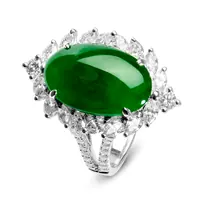
Please keep the attribution link with the card so readers can check the full guide.
Short answer for gem lovers
Jade should be evaluated by exact identity, natural or treated status, visible appearance, durability, and suitability for the jewelry or collecting purpose. Do not rely on a gemstone name alone; clear disclosure and realistic photos matter more than broad trade language.
What Matters In The Material
- Jade listings should clearly state the material or variety being offered.
- Color, transparency, pattern, cut, and polish can affect appearance and value differently depending on the gem type.
- Treatment, dyeing, stabilization, filling, coating, or imitation material should be disclosed when relevant.
- Hardness and toughness affect whether a gemstone is suitable for everyday rings, occasional-wear jewelry, pendants, earrings, or collecting.
- Gems Jewelry may not currently list Jade for sale, so treat this as practical education before you compare available natural colored gemstones.
Practical Inspection Notes
- If a listing uses only a romantic trade name, ask for the exact gemstone identity.
- If the price depends on rarity, untreated status, origin, or a special variety name, ask what evidence supports that claim.
- If the gemstone will be used in a ring, check durability and setting protection before choosing it.
- If treatment status is unknown, compare the price as an unknown-treatment stone rather than assuming the most valuable condition.
| Buying factor | Why it matters | What to check |
|---|---|---|
| Identity | Names can be broad, old, or used differently in jewelry trade. | Confirm the gemstone, variety, or gem material. |
| Appearance | Color, pattern, transparency, and cut decide whether the stone looks good in real use. | Review clear photos and video where available. |
| Treatment | Treatment can affect value, care, and person expectations. | Look for plain disclosure such as heated, dyed, filled, stabilized, coated, or unknown. |
| Durability | Some gems are suitable for daily wear; others need protective settings or occasional wear. | Match the gemstone to the intended jewelry type. |
| Value | Price depends on quality, demand, size, documentation, and disclosure. | Compare similar stones instead of judging by name alone. |
What to check before buying Jade
- Confirm the exact gemstone identity and variety name.
- Check whether the stone is natural, treated, synthetic, imitation, assembled, or unknown.
- Compare color and face-up appearance in normal lighting where possible.
- Look for visible inclusions, cracks, surface pits, coating, dye concentration, or unstable areas.
- Decide whether the gemstone is durable enough for the intended setting and wear frequency.
- Ask whether a lab report is useful for valuable, rare, or treatment-sensitive stones.