

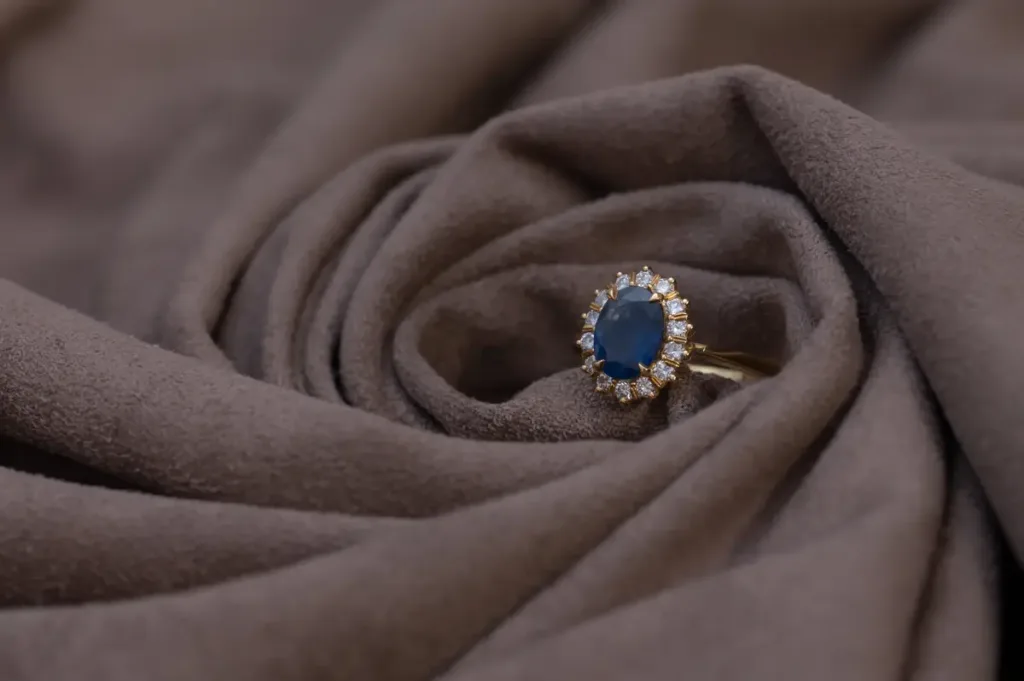
An inclusion is not merely a flaw to be counted. It is a feature inside or reaching the surface of a gemstone, formed during crystal growth or introduced by later geological events, cutting, wear, or treatment. Under magnification, inclusions can help a gemologist decide which tests to perform and whether a disclosure deserves closer attention.
Clues, not courtroom proof
Some internal scenes are strongly associated with particular gem materials: crystals, needles, healed fissures, growth zoning, color concentrations, or gas-and-liquid features. Their shape, relief, orientation, and relationship to the host crystal can support an identification. A single inclusion photograph rarely proves species, treatment, or geographic origin by itself.
Experienced gemologists combine microscopy with refractive index, spectrum, fluorescence, specific gravity, chemistry, and other appropriate tests. The evidence becomes persuasive when independent observations agree.
What inclusions can say about treatment
Heating may alter crystals, stress halos, silk, or fissures. Filling can change the appearance of surface-reaching fractures. Diffusion and other processes may leave color or structural clues that require specialized testing. The absence of an obvious clue in a photograph does not prove that a stone is untreated; magnification, lighting, and test conditions matter.
Beauty and durability are separate judgments
A small inclusion can be fascinating and harmless. Another may reach the surface at a thin corner or sit where a prong will apply pressure. Ask two different questions: does the feature distract face-up, and does it create a durability or setting concern? The answer depends on type, position, relief, size, and the gem material around it.
- View the stone face-up at normal distance before using a loupe.
- Locate visible features and watch whether they flash, darken, or disappear as the stone moves.
- Inspect the girdle, corners, and points for surface-reaching fractures or chips.
- Ask whether any clarity enhancement or fissure filling has been detected or represented.
- When the answer affects value, request an independent report for the exact stone.
Inclusions and origin
Mineral inclusions and growth structures can contribute to a laboratory’s geographic-origin opinion, but origin determination is comparative work. Laboratories may use microscopy, trace-element chemistry, spectroscopy, and reference collections. Even then, some stones do not yield a conclusive origin. A picturesque inclusion is not a passport.
For practical disclosure questions, continue with the gemstone treatment disclosure guide.
