
We’ve all asked this question at least once in our lifetime!
What is the all-time most expensive gemstone in the world? Well, to be honest I believe the most expensive gem is yet be unearthed. It’s still in the depths of the earth or could be underneath an ocean.
Gemstones are valued for their beauty, rarity, and the natural processes that create them. Gems form over millions of years under certain conditions of heat, pressure and minerals.
We love their colors, sparkle, and unique properties.
Gem collectors and people with an interest towards gemstones are constantly in the lookout for rare gemstones. Because of this demand some rare specimens have fetched millions of dollars in the market.
So, rarity is a major if not the major factor that contributes to the value of a gemstone.
Here we have gathered a list of 15 of the most expensive gemstones, including rare varieties and historically significant specimens.
Some items below are tied to history and royalty, while others are prized for their extraordinary physical attributes and amazing colors.
Well known gem varieties like colorless diamonds, sapphires, spinels, and tourmalines are excluded because this list is about fairly unknown varieties and specimens.
15. The Heart of Eternity
(specific single specimen)
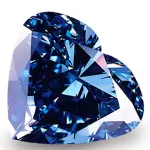
The Heart of Eternity is a rare vivid blue diamond with a whopping 27.6-carat weight. It was mined in South Africa.
Blue diamonds account for less than 1% of all diamonds mined globally, adding to the scarcity. A blue diamond of any size is a rare find, but a massive specimen over 27 carats is a whole new level of rarity.
The Steinmetz Group expertly cut the diamond before selling it to De Beers. They presented the amazing find in 2000.
It was then valued at $580,000 per-carat giving a total of USD $16 million. There are rumors that it has been purchased by Floyd Mayweather.
This blue diamond represents both rarity, radiance and resilience.
It was once displayed at the Smithsonian, offering the public a glimpse of this extraordinary marvel created by the earth.
14. The Wittelsbach-Graff Diamond
(specific single specimen)
The Wittelsbach-Graff Diamond is also a 31-carat blue diamond just few carats more than “The heart of eternity”. It was unearthed from the Golkonda mines in India.
It traveled to Europe through trader Jean-Baptiste Tavernier. In the 17th century it became part of Bavarian Crown Jewels and remained with the Wittelsbach family.
Later in 2008, the Wittelsbach diamond was acquired by the famous English jeweler Laurence Graff at an auction for $23.4 million. It was originally weighing 35.56 carats, but controversially Graff recut the diamond, enhancing its brilliance, clarity and luster.
The Wittelsbach or now the Graff diamond, remains a significant piece of gemological history.
13. The Orange Diamond
(specific single specimen)

Nicknamed as the “Fire Diamond,” and “The Orange” is a massive 14.82-carat vivid orange diamond. This is the largest known of its kind. It’s amazing indeed how diamonds can have such bright color.
Orange diamond is typically found in South Africa and Australia. They get the bright orange hue because of nitrogen trapped during their formation.
In 2013, “The Orange” fetched a whopping $35.2 million, highlighting the rarity, demand and value for colored diamonds in the market.
12. Serendibite
Serendibite is a very rare gemstone with astonishing color properties. It was first discovered in Sri Lanka in 1902.
It has deep blue-green to black hues. Some serendibite specimens show yellowish green colors under ceratin lighting. Serendibite has its unique colors due to traces of iron, magnesium, and aluminum.
It is one of the rarest gemstones on Earth, often fetches extremely high prices. Collectors love its rarity and distinctive color change appeal.
The name “serendibite” is derived from “Serendib,” an ancient Arabic name for Sri Lanka. Some deposits have been found in Myanmar too. But the gemstone remains exceedingly rare.
11. Chivor Emerald
Chivor emeralds originate from Colombia’s Chivor mine. It was rediscovered in 1896 after being abandoned for centuries.
These emeralds are known for their amazing transparency and vivid bluish-green color. Discovery of Chivor emeralds date back to the Spanish conquest of the 16th century.
These emeralds have enriched numerous royal treasures, including the Chivor Emerald Tiara.
The Emeralds are known for their inclusions. But not the Chivor emeralds! They are known for their purity and minimal inclusions. This is what set them apart in the emerald market to be prized in ridiculously high valuations.
10. Painite
Painite was first discovered in Myanmar in the 1950s. It is one of the world’s rarest minerals.
This borate crystal can have hues ranging from deep brown to reddish-brown. Occasionally displays hints of pink or orange under light.
The mineral was named after its discoverer, Arthur C.D. Pain. Interestingly, Painite was considered the rarest mineral on earth for decades, with fewer than 25 specimens identified until the early 2000s.
Although modern mining efforts have increased the availability, Painite remains an extremely rare collector’s gem type.
9. Red Beryl
Red Beryl is also known as bixbite. It is mostly found in Utah, USA, specifically in the Wah Wah Mountains. Its awesome red color comes from trace amounts of manganese in the gem.
Red beryl requires very unique geological conditions to form and this makes the Bixbite a gem of extreme scarcity.
One of the notable examples is the 2.76-carat Desert Rose gemstone, that has deep red hues with an amazing appeal.
8. Musgravite
Discovered in South Australia’s Musgrave Ranges in 1967, musgravite is one of the rarest gemstones in the world. It exhibits a distinctive greenish-gray to purplish hue.
Gem-quality musgravite is so rare that fewer than ten stones are known to exist. Its extreme rarity makes it a very attractive choice for high-end collectors.
Musgravite also has a high refractive index.
7. Jeremejevite
Jeremejevite was first discovered in Siberia in 1883. It is a borate mineral known for its vivid sky-blue color. It forms under rare and extreme geological conditions, often in combination with pegmatites.
Later on deposits were found in Namibia as well. Regardless of the origin, gem-quality Jeremejevite are highly prized for their transparency and colors.
Jeremejevite is found in small sizes. Lack of sized specimens added with the rarity of the gem, makes Jeremejevite a desired addition to a gem collection.
6. Taaffeite
Taaffeite was in fact discovered accidentally in 1945. It is a rare gemstone identified from a previously mislabeled spinel.
Taaffeite was named after its discoverer, Richard Taaffe. The gem displays lavender to mauve hues and can occasionally appear colorless. Most taaffeite is sourced from Sri Lanka and Tanzania. But gem-quality Taaffeite is extremely rare.
Its dual refractive properties, limited availability and serene colors have made it one of the worlds most expensive gemstones.
5. Alexandrite
Alexandrite was discovered in the 1830s in Russia’s Ural Mountains. This gem is famous for its striking color change, appearing green in daylight and red under incandescent light.
The green and the red color hues of Alexandrite is unique and very different from other green or red gem varieties.
Its color-change properties come from trace amounts of chromium. Alexandrite’s rarity and unique color properties contribute to its ridiculously high values. Some specimens have fetched prices exceeding $70,000 per carat.
4. Blue Garnet
Blue garnet was identified in the late 1990s. This is one of a kind Garnet because they have a color-change property from blue-green in daylight to purplish-red under incandescent light.
Blue garnets are found in Madagascar, the US, and Turkey. They are the rarest of the garnets, and an extremely rare gem variety of all gems.
Their rarity and distinct color-change qualities make them one of the most desired and pricy gemstones in the world.
3. Pink Diamonds
Pink diamonds are prized for their intense, delicate hues. They are also very rare and one of the most expensive color variant of diamonds.
The Argyle Mine in Australia, was the primary source of Pink Diamonds. However, the mine ceased operations in 2020.
These Pinks can command millions per carat. For example a 59.60-carat Pink diamond named “The Pink Star” was sold for $71.2 million in 2017.
2. Blue Diamonds
Blue diamonds arguably have the most famous specimens and stories around them throughout the history.
The first 2 items on this list – “The heart of Eternity” and “The Wittelsbach-Graff” are both blue diamonds.
But the most expensive blue diamond specimen would be “The Hope Diamond“. With a whopping 45.52-carats it is reportedly valued at over $250 million.
Blue diamonds derive its color from boron impurities. These amazing blue gems represent rarity, radiance and resilience.
1. Red Diamonds
Red diamonds are the rarest colored diamonds, with fewer than 50 known specimens worldwide. Their red hue results from unusual atomic lattice deformations.
The Moussaieff Red Diamond, a 5.11-carat specimen, is the most famous example. Red diamonds often sell for over $1 million per carat. Red diamond is one the most valuable if not the most expensive gemstone in the world!
___
These are all gem varieties and unique specimens that have been found in the recent past. The Colorless Diamonds, Sapphires, Spinels and Tourmalines are not in the list because they are not recent discoveries, nor they are in the “extremely expensive” or “extremely rare” categories.
Not everyone can own or even hold some of the most expensive gemstone specimens listed above. But sure you can find valuable and awesome gemstones online in our shop.